Utrecht at the Heart of International Cycling Tourism
Last week, Utrecht was the center of the international cycling tourism scene. On September 30, Provincial Executive Member Rob van Muilekom (Province of Utrecht), Managing Director Cor Jansen (Utrecht & Partners), and Belle de Gast, Utrecht’s Cycling Mayor, opened the EuroVelo & Cycling Tourism Conference 2026. Through October 2, professionals from 37 countries gathered at the Jaarbeurs: leading national and international figures in the fields of cycling tourism, recreation, mobility, policy, and route development. The theme was “At the beating heart of cycling.”
The conference was organized by the European Cyclists’ Federation (ECF) and serves as the annual international trade conference on EuroVelo, cycling tourism, and cycling route networks. Utrecht & Partners, the City of Utrecht, the Province of Utrecht, and Royal Dutch Jaarbeurs served as hosts and co-organizers. Participants came not only from Europe, but also from North and South America, Asia, Africa, and the Middle East. Over the course of three days, they exchanged knowledge on the role of cycling in making tourism more sustainable, the economic development of regions, and a healthy and livable environment.
Contribution to Utrecht’s Cycling Ambitions
For Utrecht, the conference aligned with the broader ambition to strengthen its position as a leading cycling region. The conference brought international knowledge and experience to the region, which can inform further work on the cycling network, recreational cycling, and cycling tourism. At the same time, the technical tours showed international participants how the city and province are using cycling to promote accessibility, health, recreation, and a livable environment.
Opening
Rob van Muilekom welcomed the participants on behalf of the region. He highlighted what the province of Utrecht has to offer cyclists: two EuroVelo routes, a varied landscape, and three UNESCO World Heritage sites. Utrecht has also previously hosted the Tour de France, the Giro d’Italia, and the Vuelta. He also highlighted the province’s investments, including some 250 kilometers of through-traffic cycling routes connecting cities and towns. According to him, cycling not only contributes to accessibility but also to health and enjoyment. Above all, he emphasized, the region was there to learn from others.
Cor Jansen emphasized knowledge sharing and learning from one another. Utrecht tops the Copenhagenize Index as the world’s best cycling city, but in the area of cycling tourism, other countries are further ahead in certain aspects—something he illustrated with his own experiences in Norway and Italy. That is precisely why international gatherings like this conference are so valuable: Utrecht is happy to share its knowledge and is also eager to learn from international participants. Knowledge that is shared multiplies.
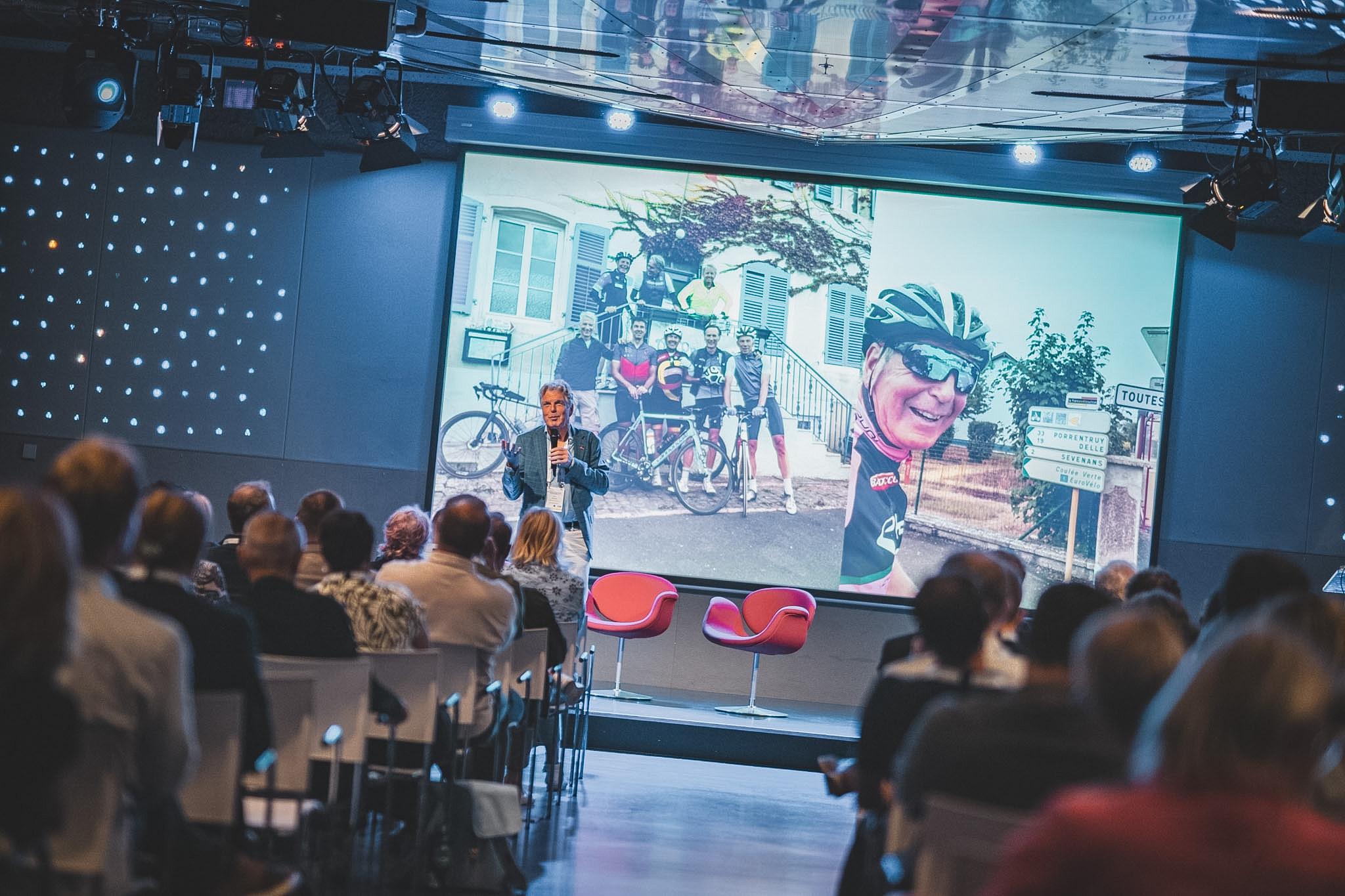
Cycling Mayor Belle de Gast, a former professional cyclist and physical therapist, spoke about the wide-ranging benefits of cycling for health, independence, quality of life, and social interaction. She invited the participants to build connections between sectors that often operate in isolation from one another. “Make plans together, go out together, and take that energy home with you,” she told the audience. Because it’s at home that those plans are turned into action.
Program
The three-day program consisted of keynote speeches, presentations, parallel sessions, workshops, and technical tours by bicycle in and around Utrecht, featuring 67 speakers. Central themes included bicycle infrastructure as the backbone for promoting cycling in all regions—from international routes to local amenities—and strengthening connections between European regions.
On the first day, the focus was on the economic impact of cycling tourism, including a panel discussion moderated by Jesper Pørksen (Danish Cycling Tourism). Esther van Garderen (Fietsersbond), Skadi Tirpak (Dutch Cycling Embassy), Eric Nijland (Fietsplatform), and Frank Bouma (RVO) discussed cycling tourism in the Netherlands and the Netherlands’ influence in Europe.
Later that day, a keynote dialogue followed featuring Herbert Tiemens, senior policy advisor at the City of Utrecht, and Agathe Daudibon, director of EuroVelo and cycling tourism at the ECF, on the question of what makes a cycling route network successful. A network is more than just a collection of routes: its value is determined by the connections it creates and by the extent to which it encourages people to cycle—while a single missing link can undermine the value of the whole.
The main focus of the program was on Thursday, October 1, with a full day of keynotes, workshops, and networking opportunities. On Friday morning, the conference concluded with six cycling excursions through the region and a group lunch.
Continuing to Build Cycling in Europe Together
The EuroVelo & Cycling Tourism Conference demonstrated that the future of cycling is not determined within a single country, region, or field. A route is only as strong as the connections it creates, and the same applies to the people working on it. Mobility, tourism, health, urban planning, and the economy can only move forward together if they share knowledge, learn from one another, and collaborate across borders. For three days, Utrecht served as the meeting place for this, with one shared ambition as the starting point: more and better cycling for everyone, throughout Europe.
News
Latest News
Read the latest news from Utrecht, Heart of Health
In the province of Utrecht, people most often cycle to work.
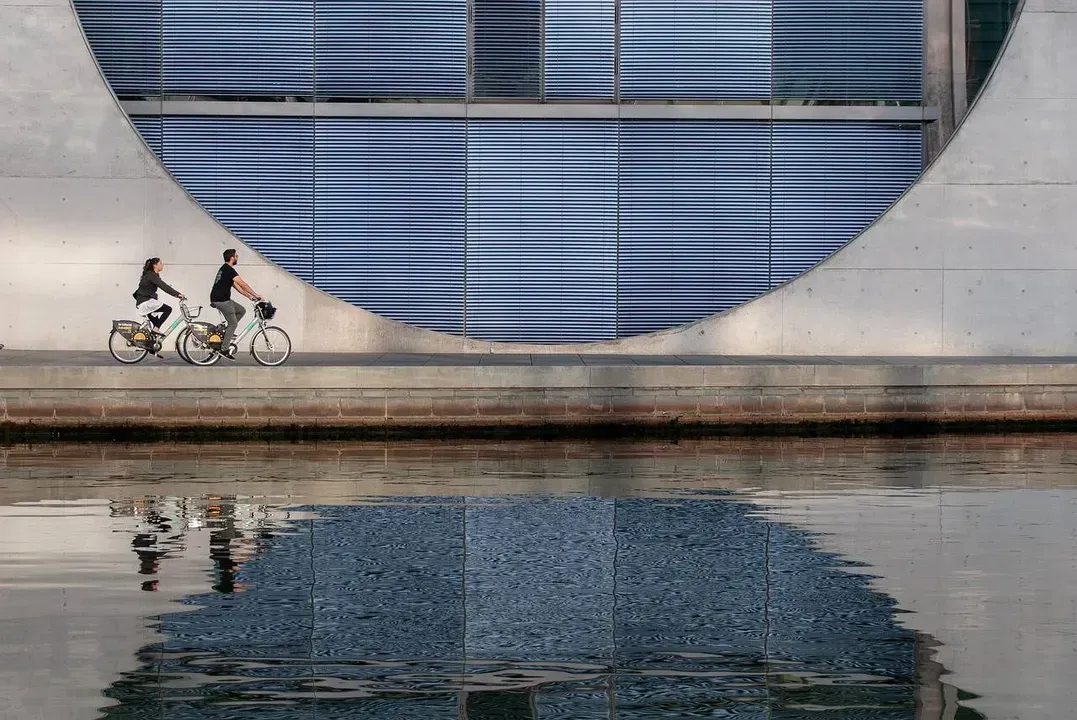
People who cycle to work are generally healthier, happier and more productive. More and more employers are encouraging this by offering cyclists a mileage allowance. Research by Nationale Vacaturebank, based on data from sources including the RIVM and IenW, shows that cycling is increasingly being rewarded financially. For example, 33% of collective labour agreements already offer an allowance for cycling less than 5 kilometres. That is 15% more than 5 years ago.The appreciation for cycling is also noticeable at the local level: in many municipalities, residents cycle to work, with the municipality of Utrecht leading the way in the province.‘Encouraging cycling is a win-win,’ says Sharita Boon, director at Nationale Vacaturebank. ‘Employees are healthier and take less time off work, and the environment also benefits.’Utrecht residents cycle to work most oftenNo less than 42.9% of Utrecht residents between the ages of 18 and 65 cycle to work or school. The percentage of residents who choose this sustainable mode of transport is higher than the national average of 37.9%. No other province scores higher. Limburg brings up the rear: here, “only” 38.6% of workers cycle.The municipalities of Utrecht and Houten most often opt for sustainable transportThe number of Utrecht residents who cycle to work or school varies greatly. The municipality of Utrecht tops the list: no less than 52.4% walk or cycle. This healthy habit is also popular in Houten and Bunnik. The top 10 municipalities where this sustainable mode of transport is most often chosen:· Utrecht (municipality): 52.4% cycle to work or school· Houten: 47% cycle to work or school· Bunnik: 45% cycle to work or school· Amersfoort: 42.6% cycle to work or school· De Bilt: 42.3% cycle to work or school· Zeist: 42.2% cycle to work or school· Veenendaal: 42.1% cycle to work or school· Woerden: 40% cycle to work or school· Nieuwegein: 39.5% cycle to work or school· Bunschoten: 39.4% cycle to work or school In Lopik, the proportion of residents who cycle to work or school is 31.1%, the lowest in the whole of Utrecht. In Vijfheerenlanden (31.9%) and De Ronde Venen (32.4%), the percentage of workers who cycle is also relatively low.Rainy year slowed growth in cyclingAfter years of growth, the number of employees cycling to work suddenly declined in 2024. Whereas in 2023, 47% of employees who lived nearby cycled to the office, this figure fell to 38% in 2024.One possible explanation for this is the weather. An analysis of KNMI data shows that the number of rainy working days in 2024 was significantly higher than in 2023. In April, the number of rainy working days was as high as 95%. It is therefore likely that people were more likely to take the car to avoid getting wet.‘The National Travel Survey shows that employees mainly choose their mode of transport based on distance, weather conditions and safety. A workplace close to home is preferred because it saves time on travelling. But the weather can also be a spoilsport. For example, when it rains heavily, we prefer to take the car or public transport,’ says Sharita Boon.
Utrecht can measure itself against San Francisco and Nairobi
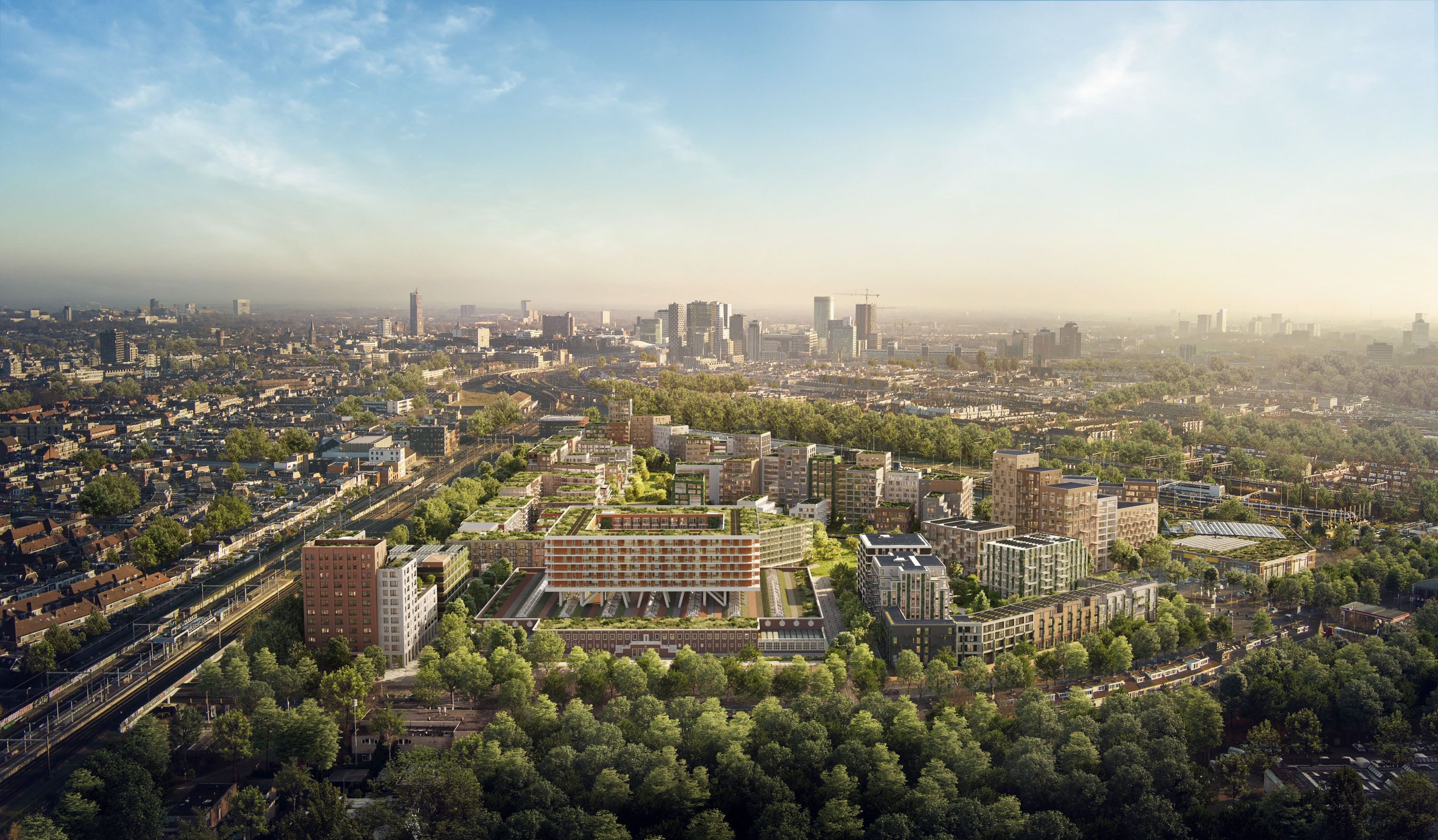
San Francisco, Kuala Lumpur, Nairobi – these are global cities that Utrecht can now measure itself against since this week. The Domstad has been selected for the World Economic Forum's (WEF) new Pioneering Places Programme. Utrecht is seen as a pioneer in innovative solutions to urban challenges, partly due to its “healthy” Cartesius neighbourhood.The official launch of the one-year Pioneering Places programme took place on 21 October during the Urban Transformation Summit in San Francisco. Michiel Dijkman, director of Economic Board Utrecht, attended on behalf of Utrecht. Economic Board Utrecht is a partnership between businesses, knowledge institutions and government bodies aimed at stimulating the economy in the Utrecht region. CartesiusTogether with Kuala Lumpur (Malaysia), Medellín (Colombia), Montréal (Canada), Nairobi (Kenya) and San Francisco (United States), Utrecht forms a group of six cities that, according to the WEF, serve as role models. They are at the forefront of solutions to universal urban challenges, such as problems with housing, infrastructure and health. Utrecht was selected as the “Heart of Health” because of the latter theme; the designation given to the region by the Economic Board Utrecht. An important reason for this is the Cartesius district, located around the CAB building near Zuilen station. Construction of the district began in 2021 and is still ongoing, but part of it has been inhabited since 2023.Blue ZonesIt is a “special neighbourhood”, says Onno Dwars, director of area developer Ballast. Not only because it will contain some 3,500 homes on less than 25 hectares, but also because it has a unique goal: residents of Cartesius should be able to live five years longer on average than residents of other neighbourhoods in Utrecht. That mission is being monitored by a ten-year study conducted by UMC Utrecht, Utrecht University and Utrecht University of Applied Sciences.Cartesius is inspired by the so-called Blue Zones: areas where people live longer than average, partly thanks to their lifestyle and environment, such as on the Japanese island of Okinawa or in Sardinia, Italy. Elements from these zones are also being applied in Utrecht, such as facilities for exercise and healthy eating, the presence of animals and a “community manager” who encourages social connection.Utrecht on the international map Partly because of this concept, Utrecht is now eligible to participate in the WEF's Pioneering Places Programme. Over the next twelve months, the participating cities will exchange experiences at international meetings and share their ideas with other cities. But how did a “small city” like Utrecht (by comparison, Nairobi, the largest of the six cities, will be almost thirteen times larger in 2024 with 4.8 million inhabitants) end up on the World Economic Forum's radar? “Utrecht was approached during the summer holidays. The WEF saw many positive developments happening,” says Michiel Dijkman from the United States. According to Dijkman, there are several factors that have put Utrecht on the international map. For example, at the end of 2024, the Overvecht neighbourhood was selected for the Bloomberg Harvard City Leadership Initiative, in which researchers from the prestigious Harvard University contribute ideas about the future of young people in the neighbourhood. He also believes that innovative projects such as the car-free Merwedekanaal zone and the close collaboration between government, business and knowledge institutions in Utrecht have made an impression. World Health OrganisationFurthermore, Dijkman explains that the WEF is interested in the fact that the Cartesius mission is also being researched. This means that if the concept works, it can be replicated in other cities.The research was not initially part of the plan, but knowledge institutions involved in Cartesius pointed out that the “five years longer life” claim should be investigated. Professor Roel Vermeulen (Utrecht University) is now leading the research. After a visit by those involved, including Michiel Dijkman, the World Health Organisation (WHO) was so intrigued that Cartesius was selected as one of its ten pilot regions worldwide. The WHO is now also investigating how healthy Cartesius is. ‘All of this has had a snowball effect on our international reputation,’ says Dijkman.What does Utrecht gain from this?An important question is: what does Utrecht itself gain from these international collaborations? ‘First and foremost, recognition, of course,’ says Dijkman. ‘We are putting Utrecht on the map with the image we want: “Heart of Health”.’He also emphasises that Utrecht has been named the most competitive region out of 232 European regions by the European Commission. ‘We have been in the top five for fifteen years, but almost no one knows that we are doing so well. The mayor sometimes says: “Utrecht should be a little less modest”. We are now actively trying to change that by establishing more international contacts.’According to him, international visibility helps to attract European funding, attract knowledge and strengthen the regional economy. 'There are regions that are further ahead economically, but the balance between well-being and prosperity is very good here. That's why we score so high. And if a neighbourhood like Cartesiuswijk really works, we can also sell that concept internationally.'Inspired by other countriesDuring the summit in San Francisco, Dijkman spoke with politicians, including a councillor from Washington DC and the deputy governor of the Argentine province of Buenos Aires. He also participated in panels, discussions and signing ceremonies. ‘It's inspiring, you learn from it, and you take that back with you to Utrecht.’ He also listened to examples from other cities, such as Kuala Lumpur and San Francisco, which are doing well in the field of circular economy. ‘That could also be interesting for Utrecht.’ The summit lasted until Thursday 23 October, after which Dijkman returned home feeling proud. ‘It's quite special to be mentioned in the same breath as Montréal or San Francisco.’ Now it's a matter of waiting to see what the rest of the year brings. World Economic ForumThe World Economic Forum is an international non-profit organisation founded in 1971 that brings together public and private leaders (including entrepreneurs, politicians and academics) to tackle global challenges. The forum is best known for its annual meeting in Davos, Switzerland.

Small bikes, big impact
BikeFlip on circular children’s bikesCasparis Beyer of Bikeflip is a guest during Crossroads 2024 in the studio of Pepper in your Building. Beyer is a young entrepreneur with a clear mission: Pepper is produced by ROM Utrecht Region, , Dotslash Utrecht and Impact033 and can be listened to on Spotify.