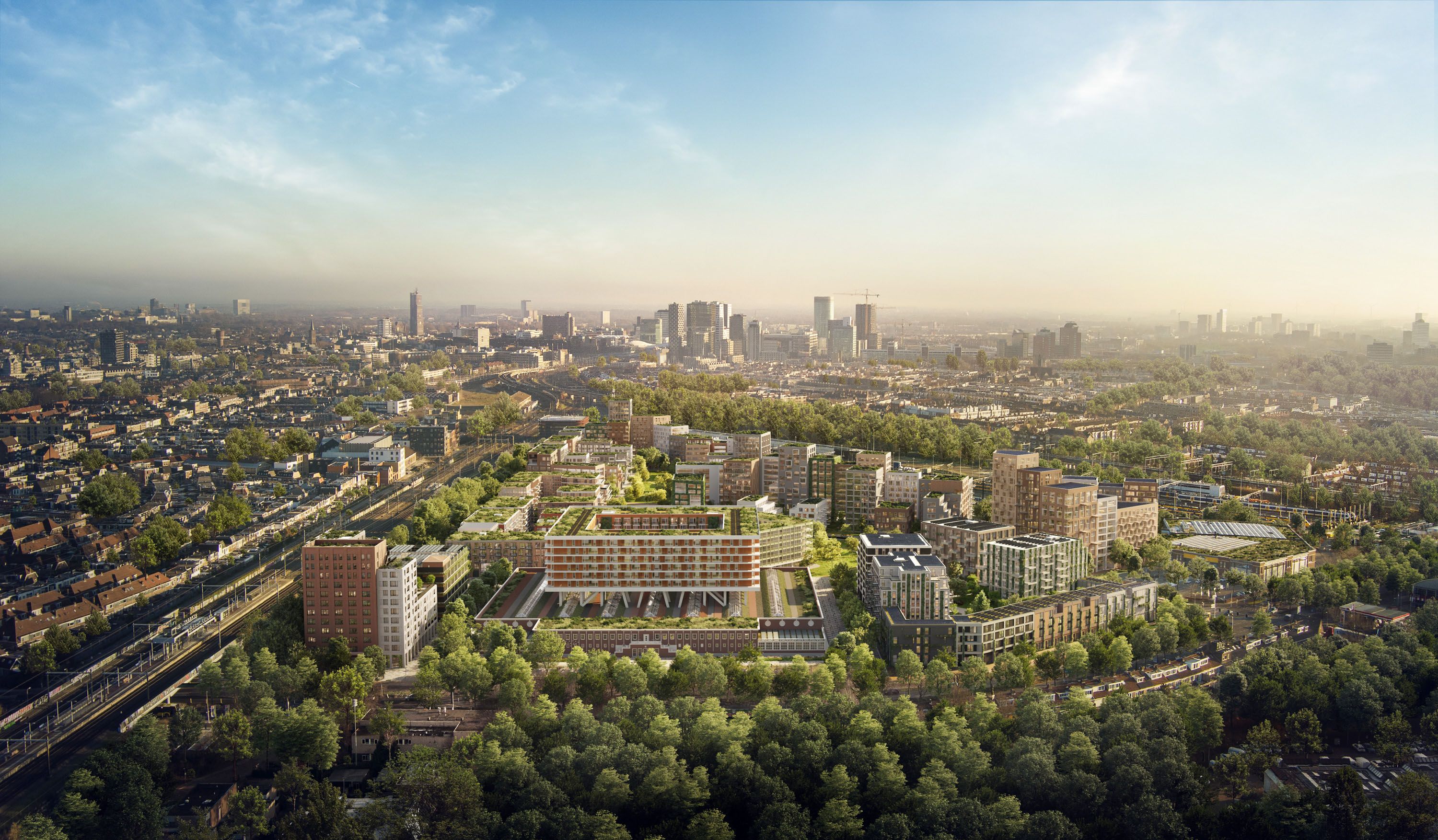
Utrecht can measure itself against San Francisco and Nairobi
San Francisco, Kuala Lumpur, Nairobi – these are global cities that Utrecht can now measure itself against since this week. The Domstad has been selected for the World Economic Forum's (WEF) new Pioneering Places Programme. Utrecht is seen as a pioneer in innovative solutions to urban challenges, partly due to its “healthy” Cartesius neighbourhood.
The official launch of the one-year Pioneering Places programme took place on 21 October during the Urban Transformation Summit in San Francisco. Michiel Dijkman, director of Economic Board Utrecht, attended on behalf of Utrecht. Economic Board Utrecht is a partnership between businesses, knowledge institutions and government bodies aimed at stimulating the economy in the Utrecht region.
Cartesius
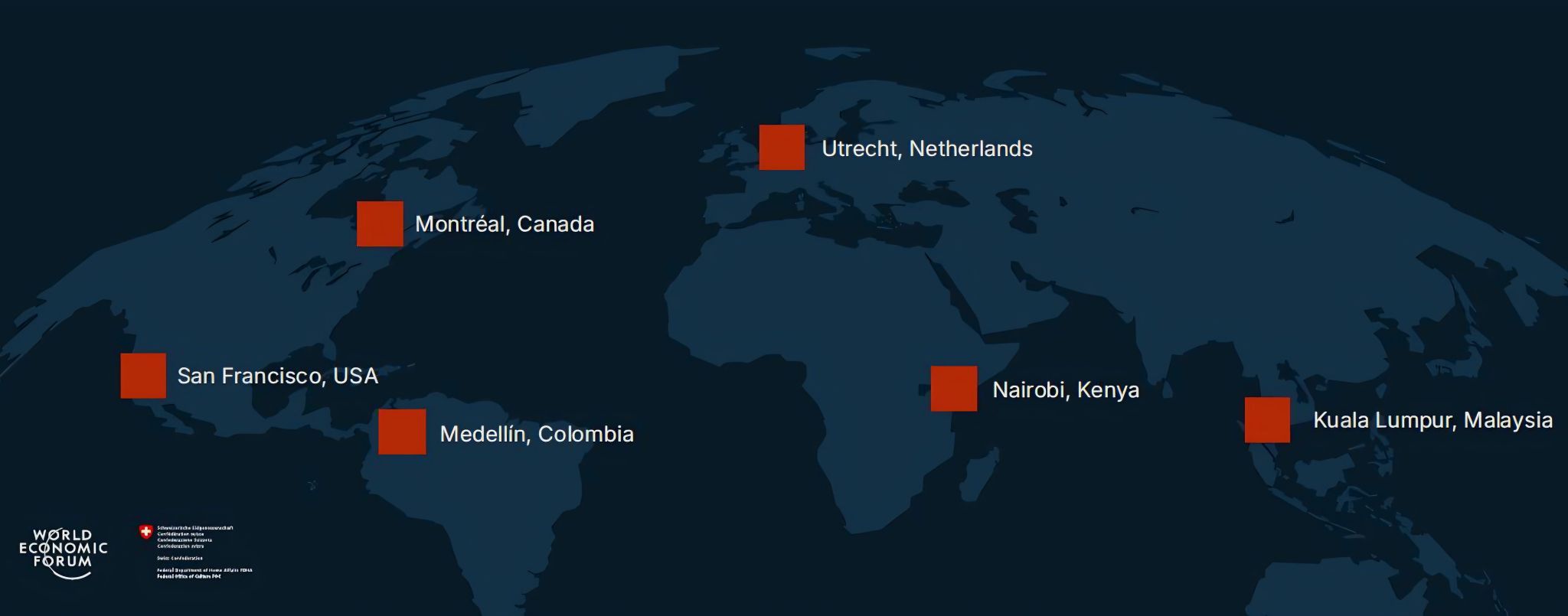
Together with Kuala Lumpur (Malaysia), Medellín (Colombia), Montréal (Canada), Nairobi (Kenya) and San Francisco (United States), Utrecht forms a group of six cities that, according to the WEF, serve as role models. They are at the forefront of solutions to universal urban challenges, such as problems with housing, infrastructure and health.
Utrecht was selected as the “Heart of Health” because of the latter theme; the designation given to the region by the Economic Board Utrecht. An important reason for this is the Cartesius district, located around the CAB building near Zuilen station. Construction of the district began in 2021 and is still ongoing, but part of it has been inhabited since 2023.
Blue Zones
It is a “special neighbourhood”, says Onno Dwars, director of area developer Ballast. Not only because it will contain some 3,500 homes on less than 25 hectares, but also because it has a unique goal: residents of Cartesius should be able to live five years longer on average than residents of other neighbourhoods in Utrecht. That mission is being monitored by a ten-year study conducted by UMC Utrecht, Utrecht University and Utrecht University of Applied Sciences.
Cartesius is inspired by the so-called Blue Zones: areas where people live longer than average, partly thanks to their lifestyle and environment, such as on the Japanese island of Okinawa or in Sardinia, Italy. Elements from these zones are also being applied in Utrecht, such as facilities for exercise and healthy eating, the presence of animals and a “community manager” who encourages social connection.
Utrecht on the international map
Partly because of this concept, Utrecht is now eligible to participate in the WEF's Pioneering Places Programme. Over the next twelve months, the participating cities will exchange experiences at international meetings and share their ideas with other cities.
But how did a “small city” like Utrecht (by comparison, Nairobi, the largest of the six cities, will be almost thirteen times larger in 2024 with 4.8 million inhabitants) end up on the World Economic Forum's radar? “Utrecht was approached during the summer holidays. The WEF saw many positive developments happening,” says Michiel Dijkman from the United States.
According to Dijkman, there are several factors that have put Utrecht on the international map. For example, at the end of 2024, the Overvecht neighbourhood was selected for the Bloomberg Harvard City Leadership Initiative, in which researchers from the prestigious Harvard University contribute ideas about the future of young people in the neighbourhood.
He also believes that innovative projects such as the car-free Merwedekanaal zone and the close collaboration between government, business and knowledge institutions in Utrecht have made an impression.
World Health Organisation
Furthermore, Dijkman explains that the WEF is interested in the fact that the Cartesius mission is also being researched. This means that if the concept works, it can be replicated in other cities.
The research was not initially part of the plan, but knowledge institutions involved in Cartesius pointed out that the “five years longer life” claim should be investigated. Professor Roel Vermeulen (Utrecht University) is now leading the research.
After a visit by those involved, including Michiel Dijkman, the World Health Organisation (WHO) was so intrigued that Cartesius was selected as one of its ten pilot regions worldwide. The WHO is now also investigating how healthy Cartesius is. ‘All of this has had a snowball effect on our international reputation,’ says Dijkman.
What does Utrecht gain from this?
An important question is: what does Utrecht itself gain from these international collaborations? ‘First and foremost, recognition, of course,’ says Dijkman. ‘We are putting Utrecht on the map with the image we want: “Heart of Health”.’
He also emphasises that Utrecht has been named the most competitive region out of 232 European regions by the European Commission. ‘We have been in the top five for fifteen years, but almost no one knows that we are doing so well. The mayor sometimes says: “Utrecht should be a little less modest”. We are now actively trying to change that by establishing more international contacts.’
According to him, international visibility helps to attract European funding, attract knowledge and strengthen the regional economy. 'There are regions that are further ahead economically, but the balance between well-being and prosperity is very good here. That's why we score so high. And if a neighbourhood like Cartesiuswijk really works, we can also sell that concept internationally.'
Inspired by other countries
During the summit in San Francisco, Dijkman spoke with politicians, including a councillor from Washington DC and the deputy governor of the Argentine province of Buenos Aires. He also participated in panels, discussions and signing ceremonies. ‘It's inspiring, you learn from it, and you take that back with you to Utrecht.’
He also listened to examples from other cities, such as Kuala Lumpur and San Francisco, which are doing well in the field of circular economy. ‘That could also be interesting for Utrecht.’
The summit lasted until Thursday 23 October, after which Dijkman returned home feeling proud. ‘It's quite special to be mentioned in the same breath as Montréal or San Francisco.’ Now it's a matter of waiting to see what the rest of the year brings.
World Economic Forum
The World Economic Forum is an international non-profit organisation founded in 1971 that brings together public and private leaders (including entrepreneurs, politicians and academics) to tackle global challenges. The forum is best known for its annual meeting in Davos, Switzerland.
News
Latest News
Read the latest news from Utrecht, Heart of Health
Wonderwoods in the spotlight for choosing tropical timber
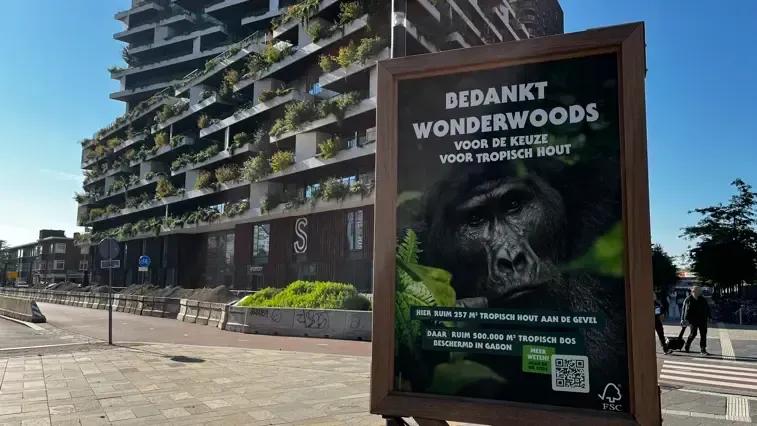
FSC puts Wonderwoods in the spotlight for choosing tropical timberThis week, two 2-metre-high bus shelters made of tropical wood were installed at Wonderwoods in Utrecht. This is a thank you from FSC Netherlands to all parties involved in the realisation of Wonderwoods for their contribution to protecting tropical forests by choosing FSC-certified tropical wood for this project. The bus shelters are part of FSC Netherlands' “Hier hout, daar bos” (Wood here, forest there) campaign.Wonderwoods and FSCIn the construction of Wonderwoods, a building with 360 trees and 9,640 shrubs and plants, considerable attention was paid to sustainability. Among other things, 257m³ of FSC-certified tropical wood (Okan) was selected. According to calculations by FSC Netherlands, this will protect more than 500,000 m² of tropical forest in Gabon*. Agreements were made regarding the use of different sizes for the cladding, so that the sawmill could reuse offcuts. This ensured that the wood from the trees was used as efficiently as possible."We notice that people still too often prefer not to use tropical wood precisely in order to protect the tropical forest. But responsible timber harvesting is never the cause of deforestation. Choosing FSC-certified (tropical) wood rewards sustainable forest management. This means there is no financial need to convert the forest into land for agriculture, such as soy plantations, or livestock farming. And so the forest is preserved," says Wyke Smit, director of FSC Netherlands.To increase knowledge and awareness, information kiosks have been placed next to the bus shelters with various QR codes linking to audio clips that allow curious passers-by to learn more about tropical wood, tropical forests and FSC. The audio clips are narrated by researcher Joeri Zwerts, climate optimist Maartje Bregman and Mark Kemna of FSC Netherlands, among others.“With Wonderwoods, winner of the MIPIM Best Mixed Use Project 2025 award, we are keeping future generations in mind. By planting 1 hectare of vertical forest and working with FSC-certified wood, we are consciously choosing to use sustainable materials. It is not without reason that we are future makers. This is also reflected in our materials.” Lars van der Meulen, Director of Sustainability at VolkerWessels.“Wonderwoods sets the tone for new developments in the centre of Utrecht: green, healthy and innovative. The wood used in this sustainable development is, of course, FSC-certified and has been beautifully processed by the architects at MVSA and Boeri. Wonderwoods marks the start of Beurskwartier and shows how we want to densify Utrecht city centre in a sustainable way. Beurskwartier will be a green urban district with varied architecture and a mix of functions, where almost 10,000 people will live and work.” Marjo de Kraker, landscape architect, Utrecht city centre.Wonderwoods is an example of how to make ecological impact tangible. By consciously choosing a Lesser Known Timber Species from an FSC®-certified forest, we reduce the pressure on the most sought-after wood species and ensure that every tree trunk is used to its full potential. Shorter lengths and multiple widths were included so that the absolute minimum amount of wood was lost and recovery remained possible. In combination with Forestlines®, which achieves fire reaction class B-s1,d0 without any pre- or post-treatment, this project shows that smart material choices and intelligent design directly contribute to sustainability and ecological gains." Steven Paulussen, manager of Paulussen Houthandel."At Wonderwoods, we want to show that nature and urban development can go hand in hand. We do this not only by bringing trees and plants back into the city, but also by making responsible choices in the construction of the building. By choosing FSC-certified tropical wood, we are actively contributing to the protection of valuable forests in Gabon," says Joost Compaan, asset manager for residential properties at a.s.r. real estate.Campaign: Wood here, forest thereThe bus shelters at Wonderwoods are part of the multi-year campaign “Wood here, forest there”. With this campaign, FSC Netherlands wants to raise awareness about everyone's influence on protecting (tropical) forests. As part of this campaign, FSC launched an online knowledge platform (www.hierhoutdaarbos.nl) featuring the most frequently asked questions and beliefs about tropical wood, along with the corresponding facts and arguments. FSC's main aim is to increase awareness of our own role in forest protection. By highlighting projects such as Wonderwoods in Utrecht and, previously, the IJboulevard and the WEC, FSC hopes to inspire and motivate other organisations to follow their example.*Calculation made using the Forest Calculation Tool from FSC Netherlands: https://www.nl.fsc.org/nl-nl/newsfeed/bosberekentool-inzicht-in-belang-keuze-tropisch-fsc-hout
Utrecht selected for Pioneering Places Programme
Utrecht selected for the new global Pioneering Places ProgrammeThe World Economic Forum has selected Utrecht for its new global Pioneering Places Programme. The official launch of this one-year programme will take place during the World Economic Forum - Urban Transformation Summit in San Francisco.Utrecht, Heart of Health was selected because of its focus on a healthy society with healthy people in a healthy living environment. The impact of the Blue Zones-inspired Cartesius Utrecht neighbourhood, the approach to equal opportunities in the Overvecht neighbourhood and the car-free Merwedekanaalzone neighbourhood are of particular international interest.This includes research into effectiveness by knowledge institutions and companies.The first group of Pioneering Places consists of:·Utrecht (Netherlands): Embedding health-centric design and wellbeing in regional development.· Kuala Lumpur (Malaysia): Promoting adaptive reuse and sustainable urban renewal.· Medellín (Colombia): Expanding smart water systems and inclusive infrastructure.· Montréal (Canada): Accelerating circularity to strengthen local character.· Nairobi (Kenya): Realising large-scale, community-oriented affordable housing and services.· San Francisco (USA): Promoting climate resilience and waterfront revitalisation. Over the next 12 months, these pioneers will work together to translate global principles into local action. They will do this through shared learning, collaboration and leadership to create better communities.This is a defining moment for the World Economic Forum's Davos Baukultur Alliance, demonstrating how global ambition and local leadership come together to deliver sustainable quality and impact in the places where we live and work.
The billion-pound biotech business
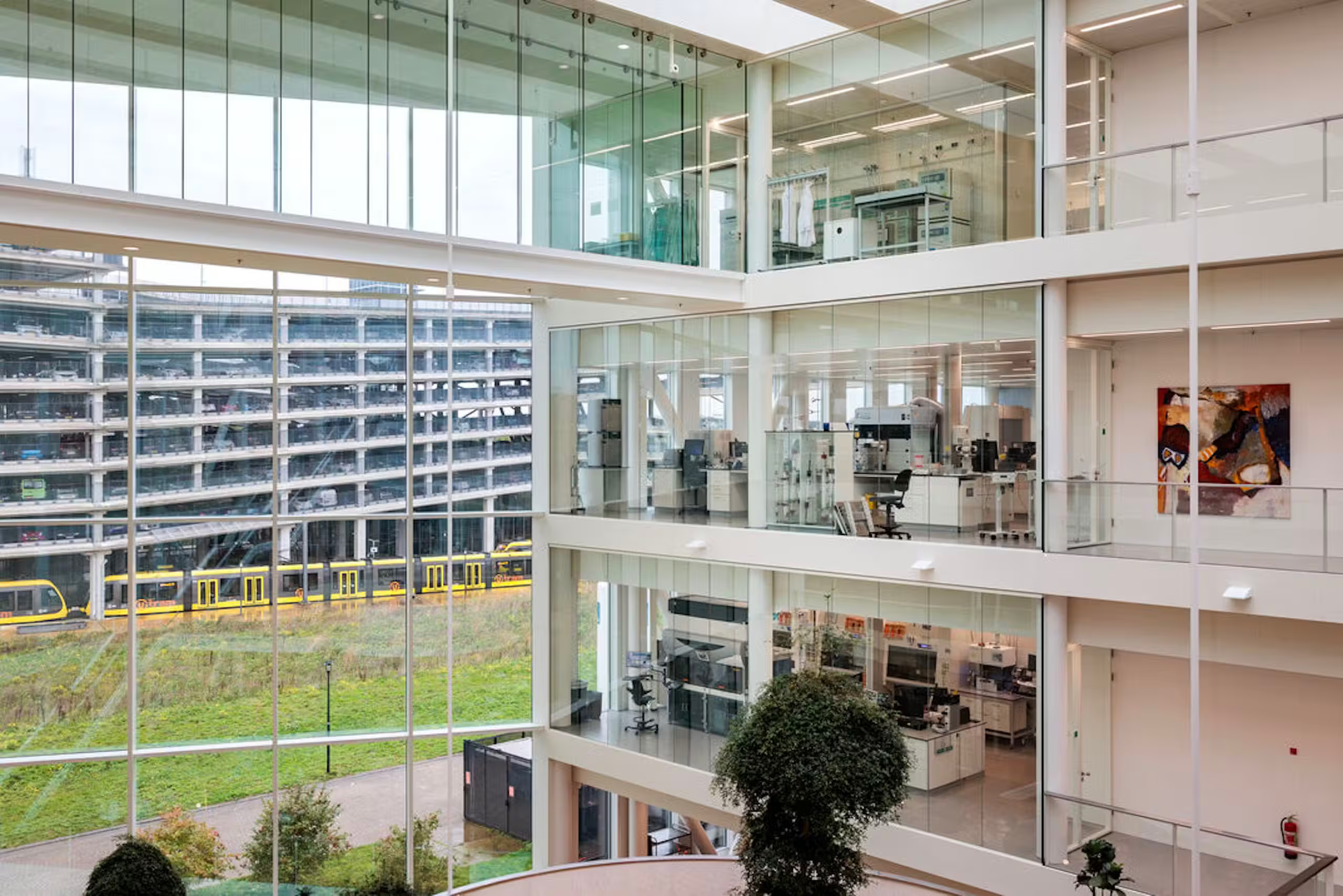
Biotech: a billion-dollar business. Utrecht Science Park is almost a city in itself.In brief· Genmab acquires biotech company Merus for $8 billion, the largest Dutch deal in the sector ever.· Both companies are located at Utrecht Science Park, which employs over 30,000 people.· Genmab's CEO emphasises the combined strength of companies and knowledge institutions in Utrecht.It is the largest acquisition ever in Dutch biotech: Genmab acquires Merus for $8 billion. Where are these two companies based? In Utrecht. The FD visits the Science Park there. 'Drug development cannot take place in isolation.'Photo: The Genmab building at Utrecht Science Park. (C) Ramon van Flymen for the FD